
How Simon Sinek’s Teachings Influenced My People-First Leadership Style
Simon Sinek’s work helped give language to something I had already begun to understand through experience: employees perform at their best when they feel safe, valued, trusted and connected to a meaningful purpose. People still need expectations, direction and accountability, but fear should not be the primary tool used to produce results.

Managing people is not simply a matter of assigning work, measuring output and correcting mistakes. A manager is responsible for creating the conditions in which people can succeed. That includes setting clear priorities, providing the right information, protecting the team from unnecessary confusion and helping employees understand how their work contributes to a larger objective.
This is why Simon Sinek’s approach to leadership has had such a strong influence on my own management style. His teachings emphasize purpose, trust, safety, service and long-term thinking. Those principles closely reflect the kind of leader I want to be and the type of workplace I believe allows employees and businesses to thrive together.
My central leadership belief: Taking care of employees and expecting strong performance are not competing ideas. When people receive clarity, support, trust and meaningful accountability, they are better equipped to produce excellent work.
Who Is Simon Sinek, and What Does He Teach About Leadership?
Simon Sinek is an author and speaker known for examining why some leaders and organizations inspire trust, loyalty and cooperation while others struggle to do so. His leadership concepts include the Golden Circle from Start With Why, the Circle of Safety from Leaders Eat Last, the importance of trusting teams and the long-term perspective presented in The Infinite Game.
Although each concept approaches leadership from a different direction, they share an important theme: leadership is about accepting responsibility for the people entrusted to us. A title may give someone authority, but authority alone does not create trust, commitment or effective teamwork.
Start With Why
People are more connected to their work when they understand the purpose behind it—not only the task they have been assigned.
Create Safety
Teams perform better when employees can raise concerns, admit mistakes and ask for help without unnecessary fear.
Build Trust
Trust develops through consistent actions, honest communication, appropriate vulnerability and mutual support.
Think Long Term
Strong leadership should build an organization capable of learning, adapting and continuing—not merely winning the current quarter.
Starting With Why Creates Meaning and Clarity
Sinek’s Golden Circle begins with three questions: why, how and what. Most organizations can explain what they do. Many can describe how they do it. Fewer clearly communicate why the work matters.
Starting with why does not mean every routine assignment needs a dramatic or inspirational speech. It means employees deserve enough context to understand the purpose behind their work.
When I assign a project, I do not want an employee to know only that a spreadsheet must be completed, a catalog must be cleaned up or a group of products must be updated. I want the team to understand the business problem we are solving.
For example, correcting product relationships in an eCommerce catalog is not just data cleanup. It can make products easier to understand, improve search and filtering, reduce customer confusion, support more accurate internal processes and prevent future employees from inheriting the same problem.
Explaining the why gives people a stronger basis for making decisions. If an employee encounters something unexpected, understanding the intended outcome helps that person determine the best next step instead of blindly following instructions that may no longer fit the situation.
This approach has influenced how I communicate priorities and lead projects. Before the work begins, I try to establish:
- The business problem that needs to be solved
- Why the problem matters to employees, customers or the organization
- The desired outcome
- Who owns the work and who owns the decisions
- Known risks, constraints and dependencies
- How the team will recognize success
Employees cannot consistently make good decisions when leaders provide tasks without context. Clear purpose helps transform a list of assignments into shared work toward a meaningful result.
The Circle of Safety and the Importance of Psychological Safety
One of Sinek’s most influential ideas is the Circle of Safety. The principle is that leaders should create an environment where employees feel protected from unnecessary internal threats so they can focus their energy on solving external challenges.
Internal threats can include humiliation, favoritism, blame, inconsistent expectations, hidden information, unclear priorities and the fear that one honest mistake will be used against someone indefinitely.
When employees do not feel safe, they often become focused on self-protection. They may hide mistakes, avoid difficult conversations, withhold ideas, resist taking responsibility or spend more time proving they are not at fault than solving the actual problem.
A safe team is not a team without standards. Psychological safety does not mean employees can ignore expectations, avoid accountability or perform carelessly without consequences. It means they can communicate honestly enough for the team to address problems while those problems are still manageable.
A healthy workplace allows an employee to say, “I made a mistake,” “I do not understand,” “I need help,” or “I see a risk” without automatically being treated as incapable or disloyal.
This principle has strongly influenced my leadership style. I would rather know about an error early enough to correct it than create an environment where employees are afraid to tell me what happened. I would rather have someone raise a thoughtful concern than remain silent while a project moves in the wrong direction.
My responsibility as a leader is to respond in a way that considers both the mistake and the circumstances surrounding it. Was the expectation clear? Did the employee have the necessary information and training? Was the workload realistic? Did the process make the error likely? Was this an isolated mistake, a repeated pattern or a deliberate refusal to follow expectations?
Accountability becomes more accurate when leaders ask these questions instead of assuming every problem has the same cause.
Leadership Means Taking Care of the People in Your Charge
Sinek frequently separates leadership from rank. A person can have authority without behaving like a leader, while someone without a management title can still choose to support, guide and protect the people around them.
This teaching has reinforced my belief that leadership is a responsibility rather than a reward. A promotion does not simply give someone more control. It creates a greater obligation to provide direction, make decisions, communicate honestly and take responsibility when the system is failing the team.
Taking care of employees does not mean shielding them from every difficult assignment or telling them only what they want to hear. Sometimes leadership requires direct feedback, firm boundaries, changing responsibilities or addressing poor performance.
The difference is whether those actions are taken to help the employee and organization improve—or simply to demonstrate authority.
People-first leadership can include:
- Setting clear expectations before evaluating performance
- Providing employees with the information and tools needed to succeed
- Recognizing strong work and meaningful improvement
- Addressing problems directly without humiliating the employee
- Explaining decisions when circumstances allow
- Protecting employees from unnecessary priority changes and confusion
- Listening when employees identify risks or capacity problems
- Accepting responsibility for leadership and process failures
- Providing opportunities for people to learn and grow
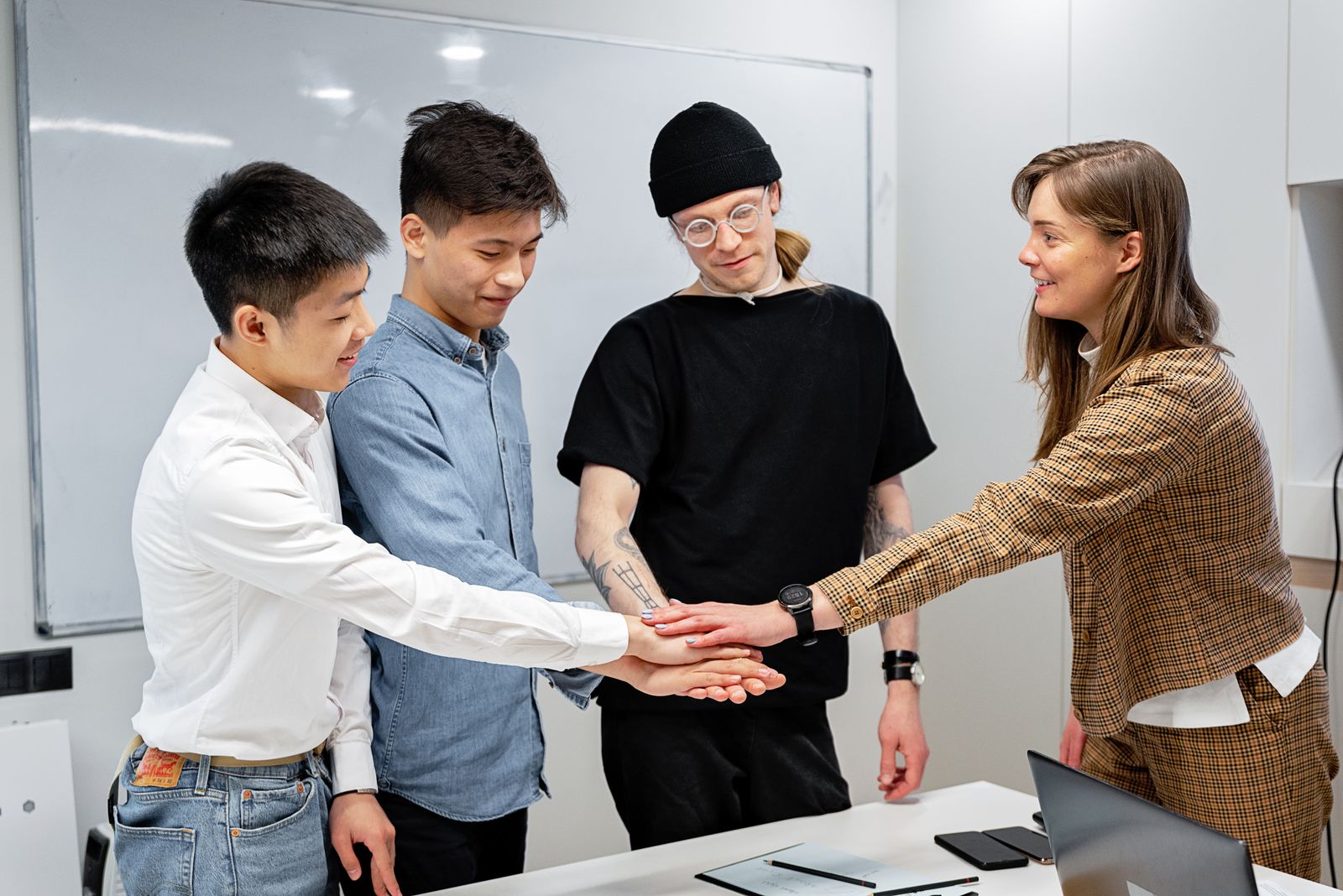
Trusting Teams Are More Honest and More Capable
Trust is not created by calling a group of employees a family or by scheduling an occasional team-building activity. It develops through repeated evidence that people can depend on one another.
Employees watch whether leaders keep their commitments, apply standards consistently, communicate important changes and respond fairly when something goes wrong. Leaders also watch whether employees take ownership, communicate honestly and follow through on their responsibilities.
Trust must move in both directions.
In my own leadership, I try to give employees ownership that matches their readiness. That means allowing people to make decisions, contribute ideas and develop solutions rather than requiring every detail to pass through me.
Delegation is not abandonment. Employees still need a clear outcome, appropriate boundaries, access to information and support when obstacles arise. However, constantly overruling people or controlling every step teaches them to wait for permission instead of developing judgment.
A trusting team can identify problems faster because employees are more willing to share what they know. It can also adapt more effectively because knowledge and responsibility are not concentrated entirely in one person.
Why Employee Happiness Matters—but Is Not the Only Goal
Happy employees are often described as if happiness were a benefit companies could manufacture through free lunches, casual dress codes or occasional celebrations. Those things may be appreciated, but they cannot compensate for unclear expectations, poor communication, unmanageable workloads or a lack of trust.
Workplace happiness is more sustainable when employees experience:
- A sense of purpose
- Respect from leaders and coworkers
- Clear expectations and priorities
- Fair and consistent treatment
- Appropriate control over their work
- Recognition for meaningful contributions
- Opportunities to improve and advance
- Confidence that concerns will be taken seriously
- A workload that is challenging but not permanently impossible
The goal is not to keep every employee happy every moment. Work sometimes involves pressure, disagreement, repetitive responsibilities and difficult decisions. A good leader cannot promise constant comfort.
What leaders can provide is an environment where people understand what is expected, believe their work matters and trust that they will be treated with dignity.
When employees feel secure and connected to the mission, more of their attention can go toward customers, quality, creativity and problem-solving. This is how a people-first management style helps employers get the best from their teams: not by extracting more labor through pressure, but by removing the unnecessary fear and confusion that prevent good people from doing good work.
Doing More With Less Has a Limit
Businesses naturally want to improve efficiency. Leaders should look for better processes, stronger tools, clearer priorities and responsible automation. There is nothing wrong with wanting a team to work smarter.
The problem begins when “doing more with less” becomes a permanent substitute for honest capacity planning.
If every efficiency improvement is immediately replaced with more work, employees never experience the benefit. If leaders continually add responsibilities without removing lower-value tasks, quality eventually declines. The business may still see short-term output, but it also accumulates errors, burnout, turnover and operational risk.
Sinek’s infinite-mindset teaching encourages leaders to consider the organization’s long-term ability to continue, adapt and advance its purpose. That perspective has influenced how I think about workload and performance.
A short-term push may sometimes be necessary. A permanent emergency is evidence that something within the system needs attention.
Responsible leadership asks:
- What work creates the most value?
- What should be delayed, simplified, automated or discontinued?
- Does the team have the capacity to meet the expectation?
- Are employees sacrificing accuracy to maintain volume?
- Is the pressure temporary, or has it become the normal operating model?
- What will this pace cost the company six months or a year from now?
How My Leadership Style Applies These Principles
Simon Sinek’s work has influenced my leadership by reinforcing that strong performance begins with the environment a leader creates.
My management style combines people-centered leadership with clarity and accountability. I want employees to feel supported, but I also want them to understand their responsibilities and take ownership of their work.
In practice, that means I try to:
- Explain the why. Employees should understand the purpose and desired outcome behind important work.
- Create clarity before activity. Roles, priorities, dependencies and decision rights should be established before confusion becomes expensive.
- Listen before diagnosing. A performance issue may be caused by skill, effort, workload, information, technology or process design.
- Make it safe to communicate problems. Early honesty gives the team more options than delayed discovery.
- Delegate meaningful ownership. People develop when they are trusted to think, decide and solve—not only follow instructions.
- Hold people accountable fairly. Support should not eliminate standards, and standards should not eliminate compassion.
- Protect long-term capability. Immediate output should not come at the permanent expense of people, quality or operational stability.

Better Leadership Creates the Conditions for Better Performance
Employers cannot demand genuine engagement. They can only create—or fail to create—the conditions that make engagement possible.
Employees are more likely to contribute their best ideas, identify problems, accept responsibility and support one another when they trust their leaders and understand the purpose of their work. They are also more likely to remain with an organization when they believe their effort is recognized and their well-being matters.
This does not make leadership soft. It makes leadership more effective.
Fear can produce compliance for a period of time. Trust creates the possibility of commitment. Constant pressure may generate a temporary increase in output. Clear purpose, sound processes and sustainable expectations build a team capable of performing over time.
That is the greatest influence Simon Sinek’s teachings have had on my management style: they reinforce the idea that employees are not resources to be depleted. They are people to be led, developed and trusted.
When leaders take that responsibility seriously, employees have a better opportunity to be happy in their work—and employers have a stronger opportunity to receive the focus, creativity, accountability and performance that engaged people are capable of providing.
Frequently Asked Questions
What is Simon Sinek’s leadership style?
Simon Sinek promotes purpose-driven, people-centered leadership built around trust, psychological safety, service and long-term thinking. His work teaches that leaders should care for the people they lead and create conditions in which teams can cooperate and perform effectively.
What does “Start With Why” mean for managers?
Starting with why means explaining the purpose, belief or desired outcome behind the work before focusing only on tasks and instructions. It helps employees understand how their responsibilities contribute to a larger goal.
What is the Circle of Safety?
The Circle of Safety describes a workplace culture in which employees feel protected from unnecessary internal threats such as humiliation, blame and inconsistent treatment. This allows teams to direct more energy toward external challenges, customers and meaningful work.
Does people-first leadership eliminate accountability?
No. People-first leadership combines support with clear expectations, honest feedback and fair accountability. It seeks to understand the cause of a problem while still requiring employees and leaders to take responsibility for their actions.
How can happy employees improve business performance?
Employees who feel respected, trusted and connected to a meaningful purpose are better positioned to communicate honestly, solve problems, support customers and contribute ideas. Happiness alone does not guarantee performance, but a healthy work environment removes many of the barriers that prevent capable employees from doing their best work.